After three decades in hospitality, I stopped looking at hotels as departments. Given that the standard hotel model is to simply divide operations into revenue-generating departments, and then arrive at a GOP (Gross Operating Profit) this was a mental shift. I started looking at them as individual profit houses, not metaphorically of course but— commercially.
A hotel is not simply the Rooms, Food & Beverage, and Spa revenue centres; it is a collection of independent profit centres operating under one roof, and each one must stand on its own. That’s the difference that changed how I saw both the opportunities and challenges for these ‘departments’ within the hotel model, and it led to informed decisions that made strategic, operational and financial sense.
What Is a Profit House?
A profit house is a department that:
- Has its own revenue target
- Has its own cost structure
- Has its own performance accountability
- Can justify its existence commercially
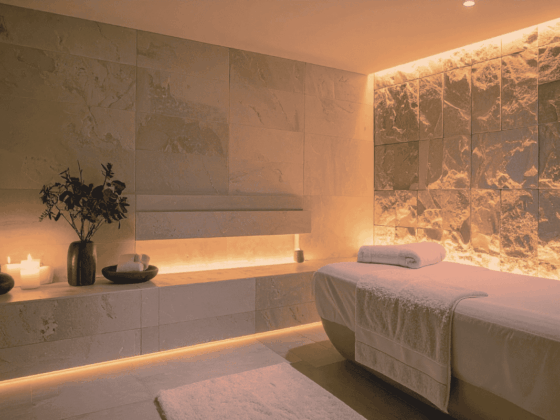
Rooms are a profit house. Spa is a profit house. Gyms are a profit house.
Food & Beverage is a profit house per outlet ie; if you have a restaurant and a bar (this means 2 profit houses)
“They may share infrastructure — but they do not share excuses.”
My thinking behind this model happened over too many years of seeing the same patterns.
Restaurants underperforming but hidden by strong occupancy. Spas discounted to drive room sales. Rooms overpriced to compensate for weak Food & Beverage, with everything blended into one P&L — masking dysfunction.
When everything is blended, nothing is accountable.
The profit house model separates departments strategically — not to divide the team, but to clarify responsibility.
How Profit Houses Work
1. Every Department Must Be Viable
If your restaurant sat on the high street — could it survive? If your spa operated independently — would it be profitable? If the answer is no, then the strategy is flawed. A department inside a hotel is not protected from failure. It is simply subsidised — temporarily.
2. Pricing Must Align With Positioning
Positioning sets the scene – building a mid-market hotel and pricing rooms at luxury levels doesn’t work. Operating a luxury spa and discounting it like a commodity is a fast-run to failure. Each profit house must reflect the true level of asset, service, and delivery across the hotel’s positioning. Alignment is everything.
3. Integration Without Dependency
Profit houses should support each other — but never rely on rescue.
- Rooms can feed Food & Beverage traffic
- Food & Beverage can elevate brand perception
- Spa can drive midweek occupancy and extended stays
No profit house should depend on another to survive; dependency hides weakness, but integration strengthens performance.
4. Accountability Is Not Blame
This model is not about pressure. It is about clarity. When a department underperforms, leadership should not panic — they should diagnose.
Is it pricing, concept, the staffing model or perhaps market positioning or operational design?
When a profit house is treated as a business unit rather than an amenity, performance and results gain clarity.
Would It Survive On Its Own?
Hotels are opening faster than ever. Restaurants are closing within 18 months. Spas are being built beautifully — but managed poorly.
Hope is not a strategy and aesthetic is not a business plan.
The profit house model forces leadership to ask the uncomfortable question:
“Would this department survive if it stood alone?” If the answer is yes — you have strength. If the answer is no — you have work to do.
A hotel only performs as well as its weakest profit house.
The strongest hospitality brands of the future will be those that stop hiding under one roof — and start performing under one strategy.